
MYTH #01
We have a methodology. That’s enough.
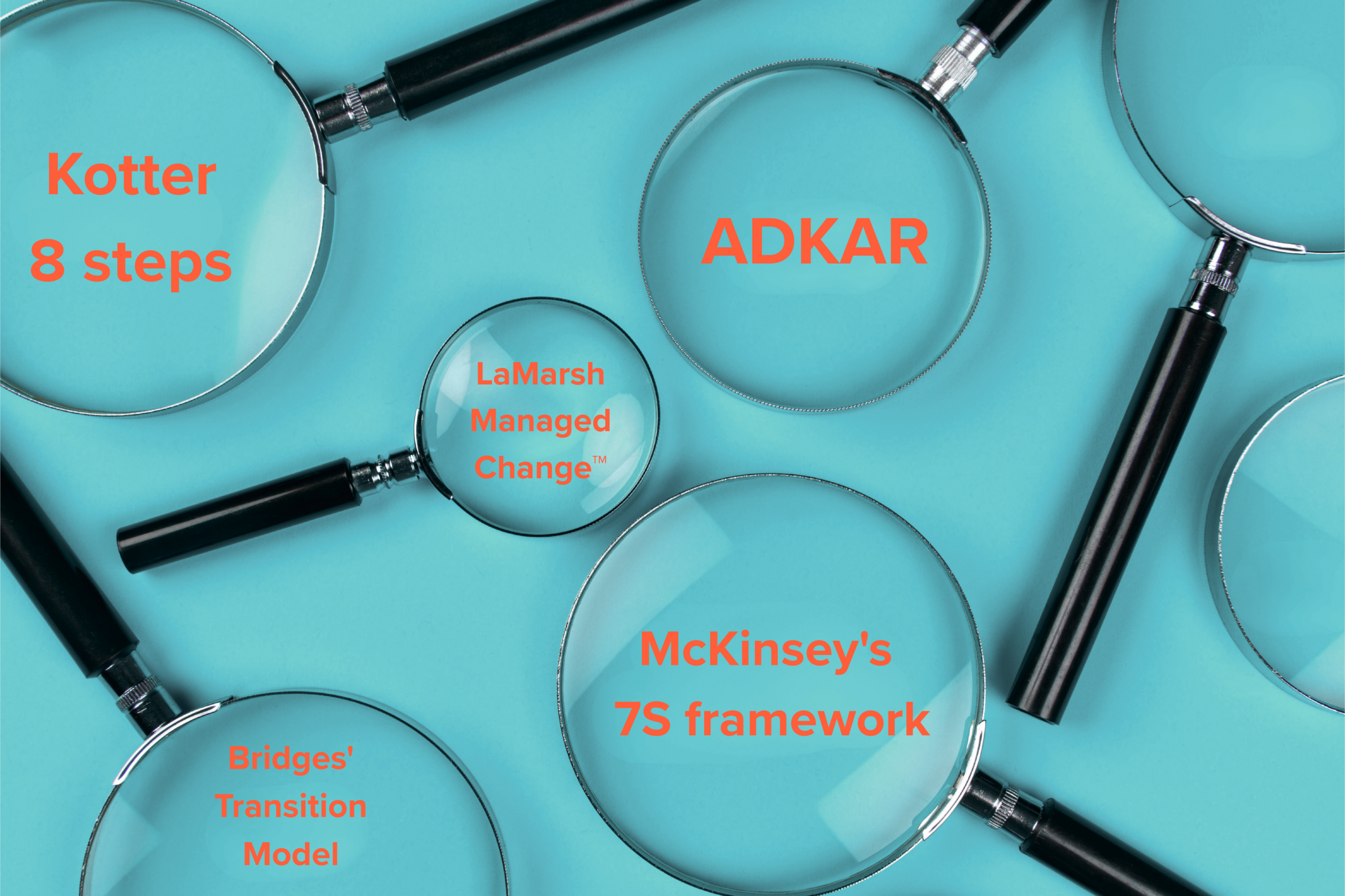
The project manager opened the presentation. Fifty-seven slides. A full-page Gantt chart.
Phases 1 to 6, a RACI matrix, milestones, KPIs.
A certified change management methodology built in — purchased, trained, ready to deploy.
Then he turned to the room and said:
“We have a plan. People will use it. They have no reason not to.”
No one said a word.
We have accepted it as a given that technology speaks for itself.
AI will save time.
The new system will speed up processes.
The tool will improve results.
You just need to roll it out, show the ROI, send the communication, and organise training.
The rest will sort itself out — because who would refuse something that helps them?
But this assumption is an expensive one. And it repeats itself in many organisations.
People don’t really have a problem with technology.
They have a problem with what the technology means.
You know that first day in a new job.
You don’t know anyone.
You don’t know where to get coffee.
You don’t know what tone of voice to use in your emails to fit the company culture.
Do people use formal language here? Or not?
The body feels it before the mind does — a slight tightness in the chest, heightened attention to every little detail, a wave of exhaustion already by mid-afternoon even though you haven’t done anything that demanding.
And then someone shows up — someone you know at least a little.
A colleague from HR.
Your new manager.
Someone who gives you their time.
They guide you through your first day, explain the logistics, show you the system.
They introduce you to two people it feels safe to ask “stupid questions.”
They bring you into the context.
And suddenly, it works. Not easily — but it works.
The fear starts to leave.
But the fear doesn’t leave because you have an onboarding document.
It leaves because you are starting to understand the context and you have a person guiding you and creating a sense of safety.
The same applies to every technology change in an organisation.
It does not matter how good the tool is.
What matters is:
- the context in which it is introduced,
- the signals being sent to people,
- what people think those signals say about them.
“The system will do this for you” — the brain translates that as: “Your job may no longer be needed.”
“AI can handle routine tasks” — the brain translates that as: “Those routine tasks you’ve been doing for ten years, and were doing them well.”
Behavioural psychology calls this LOSS AVERSION— the fear of loss is roughly twice as strong as the joy of gain.
That is not weakness.
According to the SCARF model, when you threaten people’s certainty, autonomy, status, or sense of fairness, the brain often reads it as a threat and retreats into a mode of ignoring or avoiding.
At that point, logic and benefits lose.
Neuroscience adds another layer:
Changing a habit activates the same areas of the brain as physical pain.
An old habit is not laziness. It is neurological infrastructure that works — and has a reason to work.
Methodologies usually do account for people. But they account for them as a variable that needs to be moved from point A to point B. What a person in point A is thinking, what they feel they are losing, where they see barriers — that is usually not present in any structure or strategy.
Organisations that understand this do not work with change as a linear process where people appear only in the implementation phase.
They do not ask how to persuade people.
They ask what people know — what they value in the current way of working, what they are afraid of losing, what they would change if they could.
And they understand the context in which the change is arriving.
How many changes this is in the past year.
What went wrong last time.
How much people trust the person announcing it.
Only from that raw information do they shape the change itself.
A methodology takes people into account. But it treats them as recipients, not as co-creators. And most of the time, it does not read the context at all.
A methodology describes the path. Context determines whether anyone will walk it.